Mini-Splits: When Ductless Is the Right Answer and When It Isn't
Ductless makes sense for some rooms and not for whole houses. Here's how to tell which situation you're in.
October 20, 2026 · 4 min read
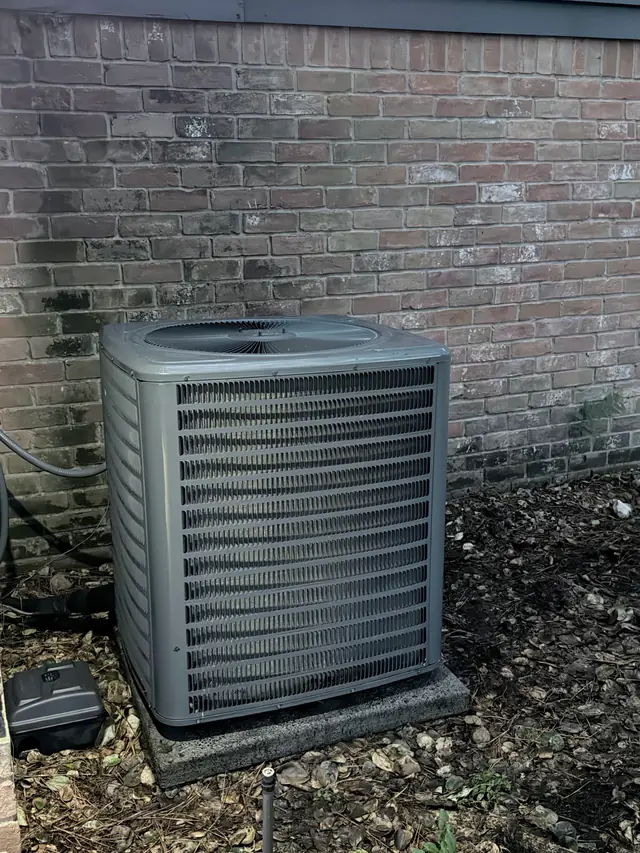
A ductless mini-split shows up in a lot of Conroe-area homes for one simple reason: some rooms were never part of the original ductwork plan. A garage converted into a game room, a sunroom added onto the back of the house, a bonus room over the garage that always runs ten degrees hotter than everywhere else, these spaces need conditioning that the existing system was never designed to reach. A mini-split solves that without tearing into walls or extending ductwork through a house that was not built for it. It is not, however, the right answer for every situation, and it is worth knowing the difference before you commit to one.
Where a mini-split genuinely makes sense
- A room addition with no practical way to extend existing ductwork to it, like a converted garage or sunroom.
- A space that runs hot or cold independent of the rest of the house, so it needs its own thermostat rather than fighting the main system's setting.
- A home office, workshop, or in-law space where someone wants control over their own comfort without affecting the rest of the house.
- A situation where quiet operation matters, since indoor units run considerably quieter than a traditional window unit or central blower on high.
Zoning is the real advantage here. Each indoor head runs off its own thermostat, so a converted garage that only gets used a few evenings a week isn't conditioned around the clock the way it would be if it were tied into the main system. That alone can mean real savings, since you are only cooling or heating the space when someone is actually in it. The equipment itself also tends to run efficiently, using variable-speed compressors that scale output to what the room actually needs rather than switching fully on and fully off like a lot of older central systems do.
Where a ducted system is still the better call
If a house already has good, well-sealed ductwork reaching every room, replacing that system with a collection of individual mini-split heads usually costs more for a similar or worse result. A single ducted system with one well-sized outdoor unit is generally the more economical way to condition a whole house that's already set up for it. Mini-splits also add a visible indoor unit to every room they serve, mounted high on a wall or the ceiling, which some homeowners like and others would rather avoid in a main living space. And a house with several rooms needing coverage can end up needing several outdoor condensers if you try to do the whole home with ductless equipment, which adds up in a way a single central system doesn't.
What installation actually involves
A mini-split needs a small line set connecting the outdoor condenser to each indoor head, routed through a hole in the exterior wall about three inches across, plus a dedicated electrical circuit sized to the unit. That's a lot less invasive than running ductwork through a house that was never built for it, but it's still a real installation, not a plug-in appliance. Where the outdoor unit sits matters too, since it needs clearance for airflow and a stable mounting surface, and where the indoor head sits determines how evenly the room actually conditions. This is a case where measuring the specific room, not just guessing at a matching size based on square footage, is worth having a technician walk the space before anything gets ordered.
Keeping a mini-split running well
Each indoor head has its own washable filter, usually set right behind the front grille, and it's a five-minute job to slide it out and rinse it every few weeks during heavy-use months. A mini-split that isn't cooling like it used to is often just overdue for that, before anything more involved is worth considering. Beyond that, the outdoor unit needs the same clearance and coil care as a traditional condenser, so the maintenance habits that keep a central system healthy apply here too, just on a smaller scale.
The honest answer is that it depends on the space. A single addition or a stubborn hot room is usually a clean mini-split job. A whole house is usually still better served by ducted central air, especially if the ductwork already works. We install and service both, and we'll tell you plainly which one fits the room you're actually trying to fix.
If you've got a room in your Conroe, Magnolia, Montgomery, Spring, Willis or The Woodlands home that never seems to match the rest of the house, it's worth a conversation before you assume the fix is complicated. Call or text (936) 703-2130 and describe the space. We'll tell you what actually makes sense for it.
Luxury Air A/C & Heating, Plumbing, (936) 703-2130
Call (936) 703-2130More articles
What a Temperature Split Actually Tells You About Your A/C
It's one of the simplest tests in the trade, and it tells a technician more about your system than almost anything else.
Why a Second Opinion on a System Quote Is Worth Getting
Most homeowners get exactly one quote before replacing a system. Here's what a second one is actually good for.