What a Temperature Split Actually Tells You About Your A/C
It's one of the simplest tests in the trade, and it tells a technician more about your system than almost anything else.
October 20, 2026 · 3 min read
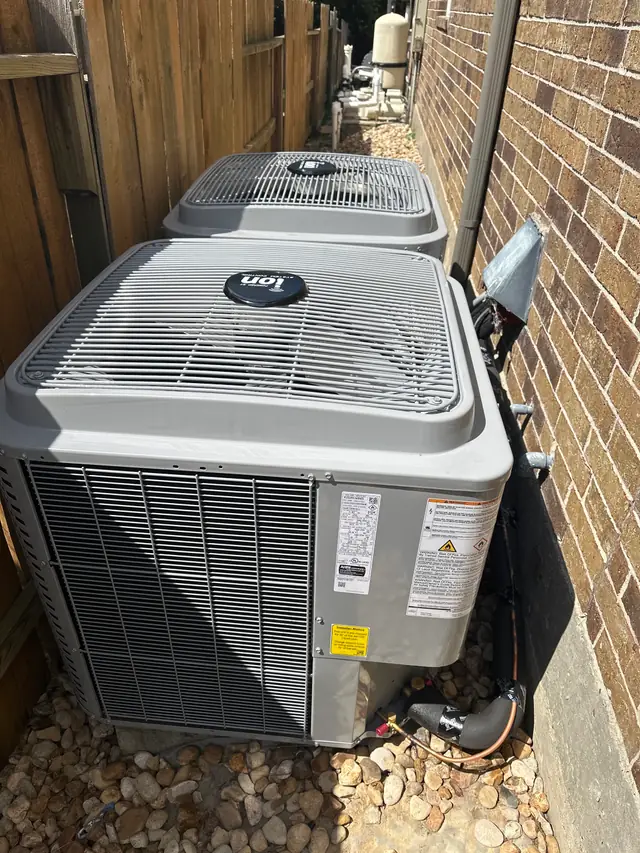
When you set the thermostat and wait, and the house still feels sticky an hour later, it is tempting to assume the whole unit is dying. Sometimes it is. More often, one measurement tells a technician most of what they need to know before they touch a wrench: the temperature split. It is not a complicated number, and once you understand it, a lot of what a good tech does on a service call stops looking mysterious and starts looking like basic math. It is also the difference between a repair that is proven to work and one that is just a good guess dressed up as a fix.
What a split actually measures
A temperature split is the gap between the air your system pulls in through the return grille and the air it pushes back out through the supply registers. Measure both with a thermometer, subtract the smaller number from the larger one, and you have your split. On a properly working residential system in Texas conditions, that gap usually lands somewhere around 16 to 22 degrees Fahrenheit. Outside that range in either direction, something is working harder than it should, or not hard enough. The number matters because it is a direct read on whether your indoor coil is actually pulling heat out of the air passing over it, which is the entire job of the air conditioner. Everything else, the compressor, the fan, the ductwork, exists to make that one exchange happen.
A rough check you can run yourself
- Grab two thermometers, or one you can move between two spots.
- Read the air right at the return grille, the vent pulling air back into the system.
- Read the air right at the supply register closest to the indoor unit, not one at the far end of the house.
- Let the system run at least 15 minutes before you read either number, so it has settled.
- Note the outdoor temperature too. Split naturally narrows on the hottest days, so context matters.
This is a sanity check, not a diagnosis. A technician working the same test also has gauges on the refrigerant lines, a clamp meter on the electrical side, and years of knowing what a normal reading looks like on your specific type of equipment. But if your home version comes back well under 16 degrees, or well over 22, that is worth a call rather than waiting it out. A split that is off in either direction rarely fixes itself, and running a struggling system for another week in Conroe's August heat usually turns a repair into a bigger repair.
What a low split is usually telling you
A weak split points at one of a short list of causes: not enough refrigerant in the system, restricted airflow across the coil, a coil that is dirty or iced over, or an electrical fault keeping a component from running at full strength. Here is the part that separates a careful tech from a fast one. A low split does not, by itself, tell you which of those it is, and the laziest fix is to assume it is refrigerant and just add more. If the real cause is a leak, that refrigerant is gone again within weeks and the homeowner has paid for a top-off instead of a repair. A proper visit checks the electrical side, checks airflow, and runs an actual leak test before adding anything to the system. It takes longer than guessing. It also means the fix holds.
The number that proves the fix worked
One of our own customers had exactly this happen. Their three-ton system was barely making a 10-degree split and struggling to cool the house. A technician found a blown fuse, ran a leak test, confirmed there was no leak, and recharged the system to the correct level. Afterward, the same test came back around 25 degrees, a real, measured improvement rather than a guess that it felt better. That before-and-after number is the whole point. It is the difference between a technician telling you the system is fixed and a technician showing you.
If your system has felt weaker than it used to, or you just want a second set of eyes and a real measurement instead of a guess, Luxury Air's NATE-certified techs serve Conroe, Magnolia, Montgomery, Spring, Willis and The Woodlands seven days a week. Call or text (936) 703-2130 and describe what you're seeing. It is a five-minute question that usually gets you a straight answer.
Luxury Air A/C & Heating, Plumbing, (936) 703-2130
Call (936) 703-2130More articles
Why a Second Opinion on a System Quote Is Worth Getting
Most homeowners get exactly one quote before replacing a system. Here's what a second one is actually good for.
Getting a Conroe House Through a Texas Summer Without an Emergency Call
A little upkeep in spring saves a lot of trouble in August. Here's what actually matters and what the twice-yearly visit covers.