What Indoor Air Quality Work Actually Does in a Humid Climate
Some indoor air quality work solves real problems. Some of it is oversold. Here's the honest difference.
October 20, 2026 · 4 min read
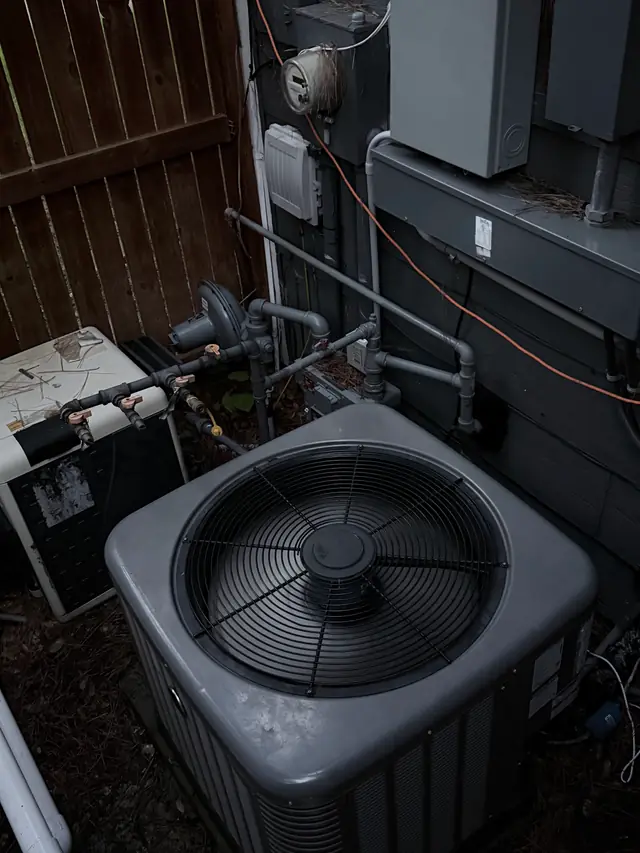
Southeast Texas humidity does more to a house than just make the air feel heavy. Conroe sits close enough to the Gulf Coast side of the state that summer air carries real moisture along with the heat, and that's the reason mildew shows up in closets, wood doors swell in their frames every August, and an air conditioner sized correctly for temperature can still leave a house feeling damp. Indoor air quality work, duct cleaning, filtration, UV lights and humidity control, gets marketed aggressively, and not all of it delivers what the pitch promises. Here's a straight look at what each piece actually does, and where the honest limits are.
Duct cleaning: real, but not a cure-all
Ductwork collects dust, pet hair and, in an older or poorly sealed system, occasionally mold, especially in a humid climate where moisture has more chances to linger inside the ducts. A proper cleaning, using rotary brush equipment like the Rotobrush system we run, physically removes that buildup rather than just blowing air through the ducts and calling it done. Where it helps most is a house with visible dust around vents, a recent renovation that kicked drywall dust into the system, or ducts that haven't been touched in many years. What it won't do is fix a mold problem that's actually coming from a leak, a crawlspace, or standing moisture somewhere else in the house. If that's the real source, cleaning the ducts treats a symptom while the cause keeps producing more.
- Visible dust or debris blowing out of vents when the system starts.
- A recent renovation or pest issue that got into the ductwork.
- Ducts that, as far as anyone remembers, have never been cleaned.
- A musty smell specifically when the system is running, not all the time.
Filtration: matching the filter to the actual problem
A higher-rated filter catches finer particles, which matters if someone in the house has allergies or asthma. But a filter rated far beyond what your system was designed to handle can restrict airflow enough to strain the equipment, the same problem a dirty filter causes. The right filtration upgrade is matched to both the health concern and the specific system pulling air through it, not just bought at the highest number on the shelf. This is worth a conversation with a technician who knows your equipment rather than a guess in the filter aisle.
UV lights: useful for a specific job, not a general fix
UV germicidal lights installed near the coil target biological growth on that coil surface, where dark, damp conditions inside the system can otherwise support mold and bacteria over time. That's a real and fairly narrow job. What UV lights do not do is sanitize the air throughout the whole house or replace source control somewhere else in the home. Anyone selling a UV light as a fix for a humidity or mold problem that's actually happening in a bathroom or a crawlspace is overselling one piece of equipment for a problem it was never designed to solve.
Ventilation and general comfort
Not every stuffy-feeling room is a filtration or duct problem. Sometimes it's simply a room that gets less airflow than the rest of the house because a register was closed off years ago, or a return path is undersized for that part of the home. Before adding a piece of equipment to solve a comfort complaint, it's worth checking the basics, that the registers are open, that furniture isn't blocking a return grille, and that the room in question is actually getting the airflow the rest of the house gets. It's a less exciting answer than a new device, but it's often the correct one.
Humidity control: often the piece people skip
A correctly sized air conditioner already removes a meaningful amount of humidity as a byproduct of cooling, which is part of why an oversized system, one that cools the air fast but shuts off before it's run long enough to pull moisture out, can leave a house feeling clammy even at a comfortable temperature. If humidity is the actual complaint, sometimes the real fix is confirming the system is sized and running correctly before adding separate equipment on top of it. Other times a dedicated dehumidifier tied into the system is the right call. Either way, it starts with understanding what's actually happening rather than adding equipment and hoping.
Air quality work is real and it solves real problems, but it solves specific ones. If something in your Conroe or Montgomery County home smells musty, feels damp, or is bothering someone's allergies, we'd rather walk through it with you and find the actual cause than sell you a general solution. Call or text (936) 703-2130.
Luxury Air A/C & Heating, Plumbing, (936) 703-2130
Call (936) 703-2130More articles
What a Temperature Split Actually Tells You About Your A/C
It's one of the simplest tests in the trade, and it tells a technician more about your system than almost anything else.
Why a Second Opinion on a System Quote Is Worth Getting
Most homeowners get exactly one quote before replacing a system. Here's what a second one is actually good for.